DMCA Protected

DMCA.com ALL contents herein have full copyright protection - word, image, sound. That means NO ONE is to copy, quote, take, download anything here without my permission. Since so far no one has asked for my permission that means if you see a photo elsewhere, like on a website, it's been stolen.

Blogs

Monday, June 22, 2015

The fight against universal health care in the U.S. has its roots in the peculiar institution

The fight against universal health care in the U.S. has its roots in the peculiar institution

On the Monday in January 2015 commemorating the life of the Rev. Dr. Martin Luther King, Jr., Healthcare-Now emailed its subscribers a message titled “Reader’s Guide to Racial Equity in Healthcare.” The message started with the still necessary reminder that no biological basis for race exists, going on to point out that “[i]n the United States . . . segregationist politics in Congress blocked national healthcare for much of the 20th century – not, as is often claimed, the growth of employer-based insurance during WWII.” While this information is correct, nothing was said about the lingering effects of slavery on healthcare.

That night Fresh Air on National Public Radio (NPR) aired an interview with Eric Foner, history professor at Columbia University, about his new book Gateway to Freedom: The Hidden History of the Underground Railroad. Professor Foner pointed out that the U.S. Constitution itself has a Fugitive Slave clause, although vaguely worded. Even so, by 1850, several U.S. states, mostly in the south, not satisfied with this, had passed Fugitive Slave laws. The federal Fugitive Slave law of 1850 was intended to prevent the South from seceding but it had the opposite effect. According to Foner, while slaves or even free black people were brutally captured in some northern states to be sent back south into slavery, other states, like New York, refused to enforce the law vigorously. Still, at this time, NY was a very dangerous place for free black people as shown in the movie “12 Years a Slave,” based on an actual memoir. Southern states saw non-enforcement or lax enforcement of the Fugitive Slave Law as the North violating federal law and therefore, an example of northern untrustworthiness. This was one of the important factors leading to the U.S. Civil War.
Foner commented that the U.S. Constitution was deeply flawed from the beginning. When the Constitution was ratified, slaves were 20% of the population but not included in “We the People.” For Foner, this omission is “a flaw in the DNA” of this country, which demands a “com[ing] to terms with how deeply slavery is embedded in the country’s history.” Noticeably, the written “highlights” for this interview that you’ll find on the NPR website, omit this part of Foner’s interview. (See the seminal article “Structural Racism and American Democracy” published in 2001 by the late Columbia University Prof. Manning Marable, for more on race and omission in the history of black oppression in the US.)
I go to some length to relate these points, because it’s clear that the slow development of universal health care in the US stems from a cultural inability to honestly face the 500 years of slavery, mistreatment, torture, physical and mental abuse, theft, disrespect, and murder of America’s black denizens, forcibly brought to this   “land of the free and home of the brave.” The cause is not just the persistence of the form of ignorance we call racism, but in the historical fact of slavery itself as experienced in the U.S.
The majority of so-called informed people in the U.S., including medical providers and medical researchers, are found lacking when it comes to the illusion of race. They show their ignorance in their misguided and dangerous obsession with
finding racially focused genetic reasons for such complex ailments as cardio-vascular disease (CVD), high blood pressure, and diabetes. This obsession waned (somewhat) during the mapping of the human genome, but has roared back into mainstream medicine to the detriment of the health of all, and not just so-called “people of color.” Medical researchers still debate the merits of black “salt hypersensitivity,” using research conflating “non-white” with “black.” For these researchers “black” means persons with ancestors who experienced the Middle Passage. The black US population, however, is extremely diverse. More than a few came to the US after the American slave trade ended (officially outlawed in 1808) and many others have no African ancestors. Furthermore, as should be clear, not all “non-whites” are black!
Simultaneously, from time to time, Republican and several Democratic members of the U.S. Congress, seek to weaken or eliminate Social Security Disability, Social Security in general, Medicaid, and Medicare. If you take a careful look at the application forms and processes for SS Disability and Medicaid, you quickly come to the conclusion that the system’s focus is on rooting out any possibility that the person applying for such aid is not “faking it,” malingering, or lying so as to avoid working.
People receiving SS Disability do not “work” at a job. People on Medicare mostly do not “work” at a job. People receiving Medicaid are receiving funds from the government to pay for their health care or at least the premiums so that they do not become a public health hazard. All of these people are either not in the workforce mostly and/or are receiving funds without working for it at the time of receipt. This sticks in the craw of a culture of people who firmly believe that the main, if not only sole purpose of people living in the U.S., unless very wealthy, is to do wage work, and preferably hard physical labor, for the benefit of the capitalist system and capitalists.
U.S. style capitalism is built on slavery. We hear variously that the U.S. does not have universal single payer health care because it’s too expensive. If the US is so broke then how can it afford war after war, or massive tax breaks for the Waltons and Walmarts? (Read the books of the openly Republican David Cay Johnston on this point, such as Free Lunch.) If you call yourself a liberal and believe that the lack of universal health care “can’t be helped” or that universal healthcare failed thanks to the intense lobbying efforts of medical device makers and the pharmaceutical companies, then you are shying away from the reality: non-unionized working class and even lower middle class jobs in the U.S. operates a lot like slavery. Those in power want to expand this profitable slave labor economy, which free and equitably distributed healthcare would undermine.
Generally speaking, the perception of the wealthy class towards everyone else is that the latter are akin to slaves, that it’s OK for workers to have their wages stolen from them, their health stolen from them, that they are to be worked into an early grave, that even one’s health has to be embedded in capitalism through the intimate participation of for-profit corporations, as the health of enslaved Africans was embedded in the plantation system. This attitude is rooted in slavery.
To break this mindset, we need to fully face the lingering psychological and socio-cultural effects of slavery. A nation-wide Truth and Reconciliation-type process which includes seriously addressing the several long-standing calls for reparations, might be a start to changing the racist DNA of which Prof. Foner spoke. More of us need to be talking about this, day after day, rallying in the streets with relevant signs, songs and chants, use all the tools at hand including social media and old school lobbying, towards building a massive movement calling for a real end to slavery of the mind.

(Written by me for publication in The People's Press under the pen name of Dorian Grayson)

https://thepeoplespress.wordpress.com/2015/04/17/the-fight-against-universal-health-care-in-the-u-s-has-its-roots-in-the-peculiar-institution/

Sunday, March 15, 2015

The back story to U.S. cultural denial of global warming

Hour long speech on the U.S. cultural denial of global warming. I changed the word usage of "American" to "U.S. cultural" as the use of "America" to describe just one country on the entire continent named after Amerigo Vespucci, a usage that infuriates citizens in Central American and South American countries.  The U.S. is the only country on the planet to my knowledge that is confused about its name and has multiple names: U.S., U.S.A., America, the States, and maybe more.  Perhaps reflective of the confusion and delusion of U.S. culture about SO many issues, such as race, the lack of genetic markers for race, refusal to truly face the multi-generational fallout from the holocaust of the enslavement of Africans and the mass murder and displacement of Turtle Island's indigenous peoples, as a start.  I bring up this point here as the speaker is a major intellectual and thus should know better. Click on the link below to get to the video and go all the way to the end for some important points she makes about the politics behind the denial.

The back story on U.S. cultural denial of global warming

Friday, February 27, 2015

OK. No photos of trucks this time. Just info.  Thursday night, four bright red trucks like pickups but dirty from the challenging weather in these parts at this time, pulled into the parking lot for the new motel in Apalachin, NY on Rte. 434 just off the Apalachin exit off Rte. 17.  Most likely they had come down PA Ave., from PA, bringing frack waste on their tires, then turned right onto Rte. 434 then to the motel, beside the Blue Dolphin Restaurant. Gone Friday morning. 
Saw them again on subsequent nights. 

Review of The Price of Thirst: Global Water Inequality and the Coming Chaos. By Karen Piper. Minneapolis. University of Minnesota Press. 2014.


The Price of Thirst:  Global Water Inequality and the Coming Chaos. By Karen Piper. Minneapolis. University of Minnesota Press. 2014.

Karen Piper's new book should be on the short list of anyone concerned about the important crises affecting what's needed for life to continue on the "water planet." Piper writes beautifully, making her book easy to read quickly without the reader losing sight of the important details she reveals.  Her style crosses genres as she weaves from a journalistic stance to an ethnographic stance.

Her background in post-colonial studies serves her well as she travels from region to region across the globe.  Thus she is able to see and grasp the larger histories and implications of the conversations she has with people living without water or seeing their sources of water taken away or blocked from access, usually all for the sake of the bottom line of a corporation often working with a government that has put aside its responsibility for the needs of a country's citizens.

Each of the six chapters of this book take us from California in the U.S. to Chile to South Africa to India to Egypt to Iraq.  Piper spent seven years pursuing this investigation, interviewing people who take different stances on the issue of water, whether they're for privatization or not, whether they view water as a "good" and therefore a commodity and therefore appropriate for being put up for sale to the highest bidder, put on a stock market in its own right separately from corporations that do the extraction from aquifers and the bottling, versus those who view water as a "right" or in the commons or a manifestation of the holy and thus should never be put up for sale.

Carefully referenced with sometimes startling photos, not the least of which is the one "gracing" the book's cover, the editing is well done. 

Piper collects yet more evidence, on the ground literally, to add to the proof for those who subscribe to this being a time for people to turn their backs on capitalism as it has been practiced since the start of the Industrial Revolution. But she is never dogmatic and never drowns the reader in numbers or statistics.  Other books, articles, and reports have provided readers with massive amounts of numeric data.  Piper's appeal is to the heart and to the importance of individual personal experience.  This is one of the many ways that makes this book differ from others such as Maude Barlow and Naomi Klein writing in this burgeoning field of works about global crises.  Piper's approach is more like that of Vandana Shiva in taking the stance that the political is personal and all politics are local. Piper's meeting with Vimla Bahuguna, to whom she dedicates the book, literally and figuratively centers the book.

Allied to the issue of access to water for drinking, cooking, bathing, washing, food production, etc. is, of course, the equally pressing problem of water pollution.  While water pollution is not the focus of her work as her center of attention is on global inequality in access to clean water, the issue of water pollution intertwines with the crisis of global water inequality.  Pollution has occurred and continues to occur where the local residents tend to be poor and powerless as in many of the places Piper visited, away from the interest of Western media and thus the residents of wealthy countries in Europe and the U.S.  Piper chooses to begin with a visit to a site in the U.S. and ends with a visit to a site in a country which the U.S. recently invaded and occupied.  These placements could form the basis for another extensive discussion. Piper hints but is never strident.

This book is appropriate for a very wide audience, including community book reads and discussions as well as undergraduate and graduate courses in Sustainability, Environmental Studies, Post-colonial Studies, English, Sociology, Philosophy, and especially courses with an interdisciplinary orientation. 

Reviewed by Cecile A. Lawrence.  Independent Scholar  and UNOH-VC faculty. Due to be published in an issue of American Studies 2015. 

Saturday, February 21, 2015

So Denver CO people have organized and gotten public re fighting fracking.
Don't frack Denver urges immediate moratorium on fracking

Here's the new train station in Denver, possibly built with taxes from fracking
 and a possible cracker plant (cracking natural gas to create plastic) just outside Denver.  Lots of resulting air and ground pollution, doubtless.

Thursday, February 19, 2015

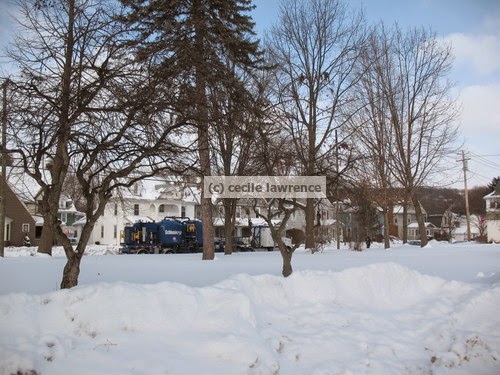
What looks like a Schlumberger (because of the shade of blue) truck parked at the curb on a street running on the west side of the Endicott Library, just a few blocks south of the site on North Street where "cleaning" of the IBM chemical pollution plume cleanup continues. A couple days ago.

Sunday, January 25, 2015

On the watering of cattle

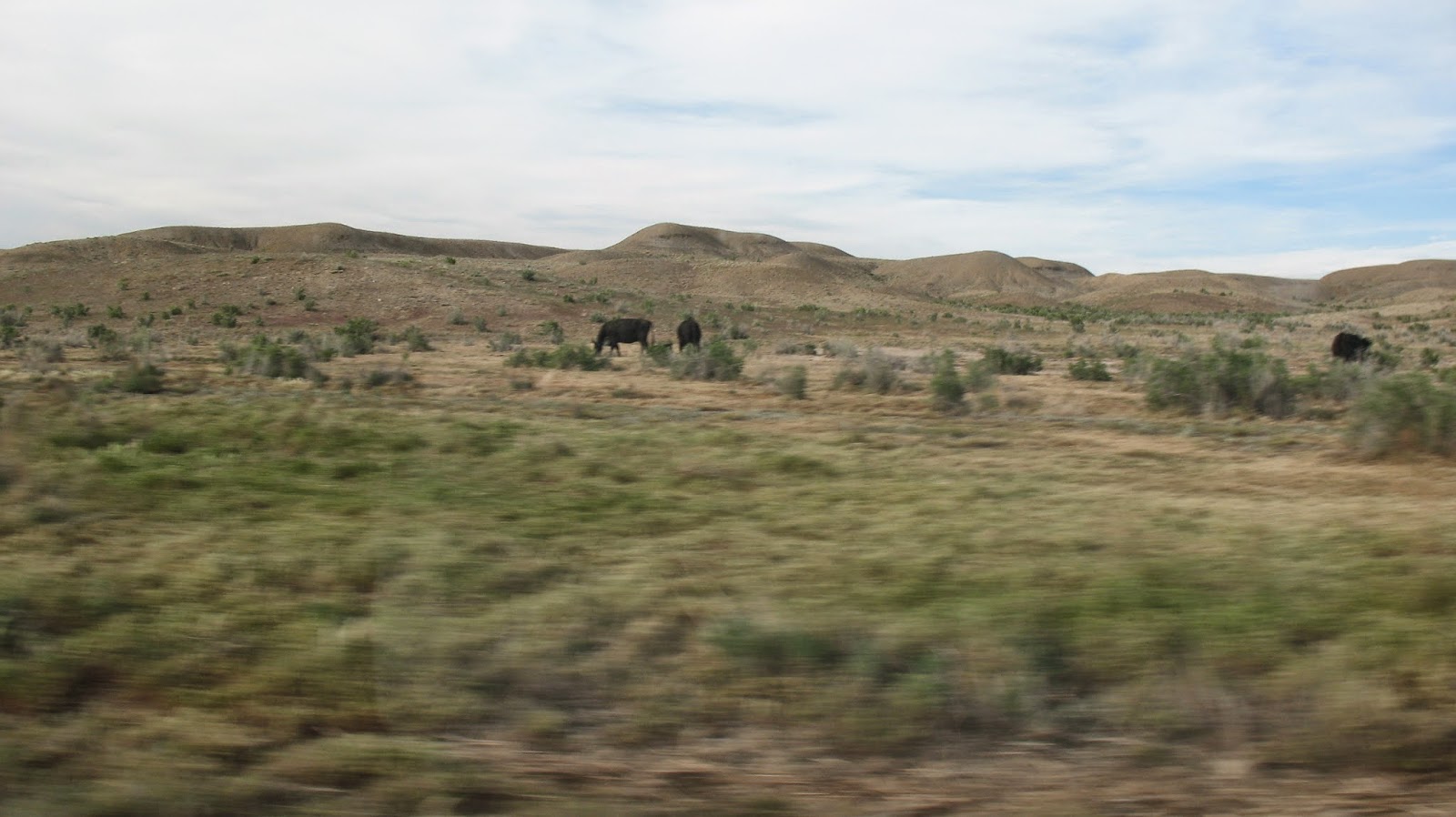
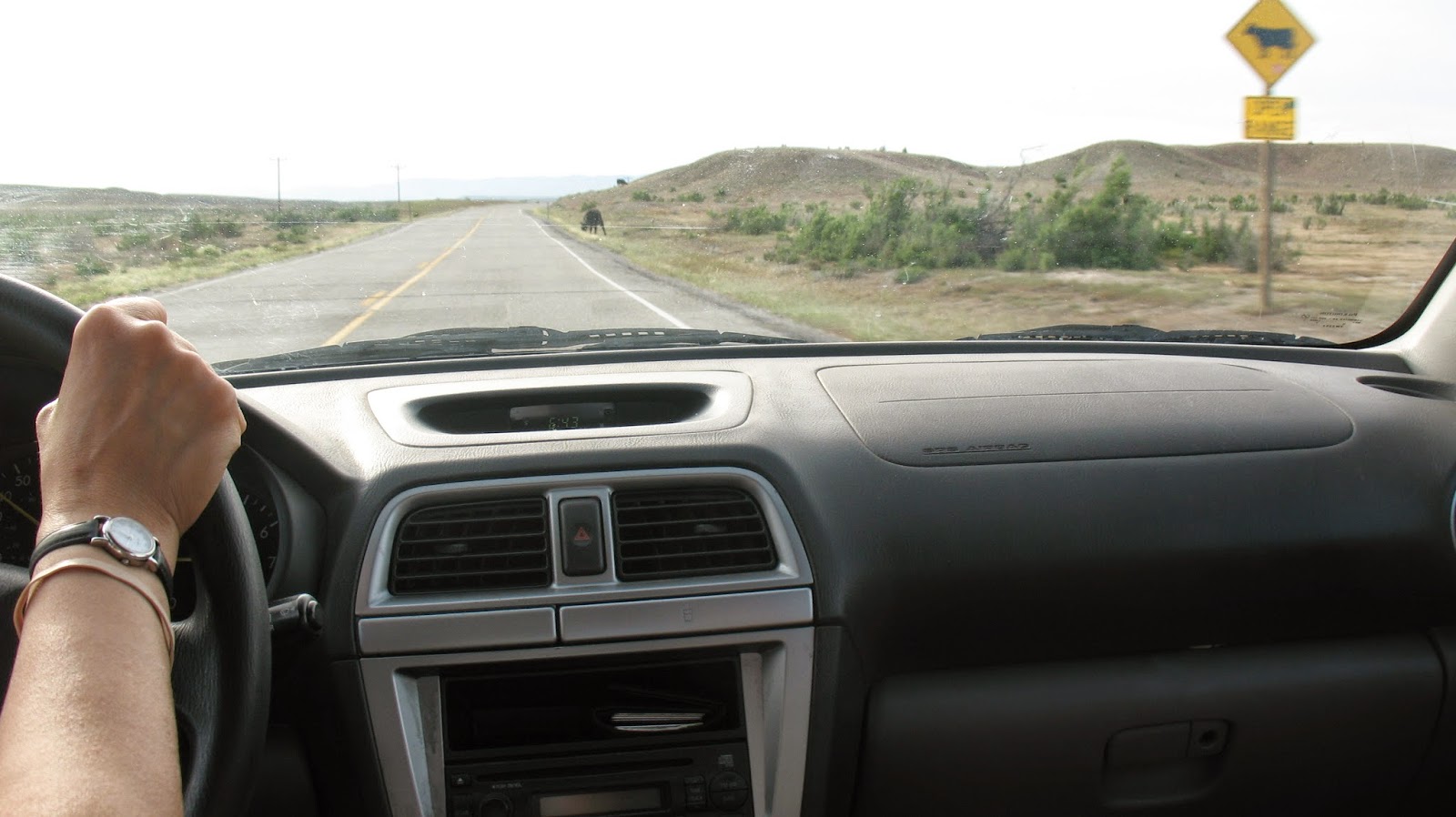
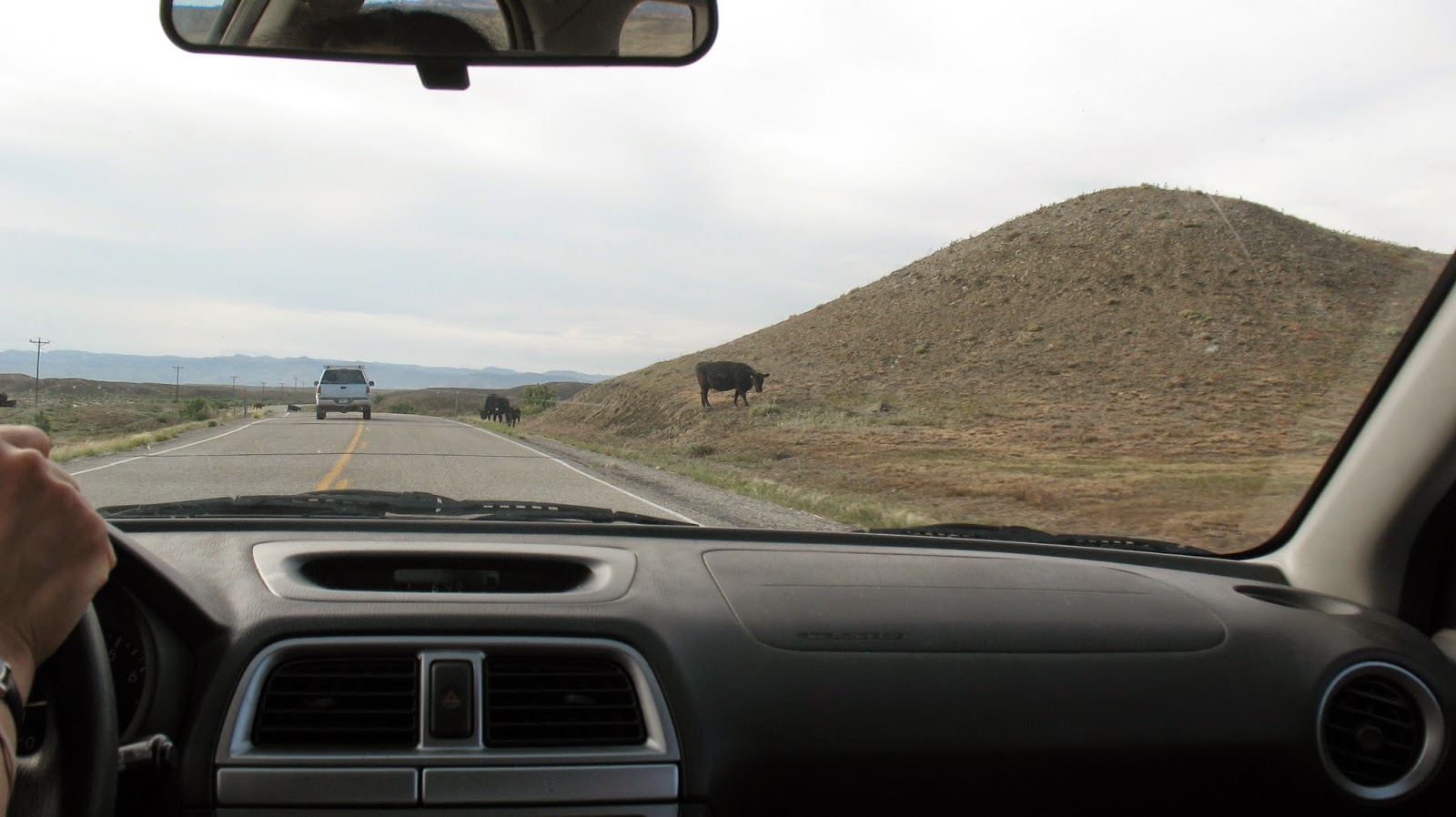
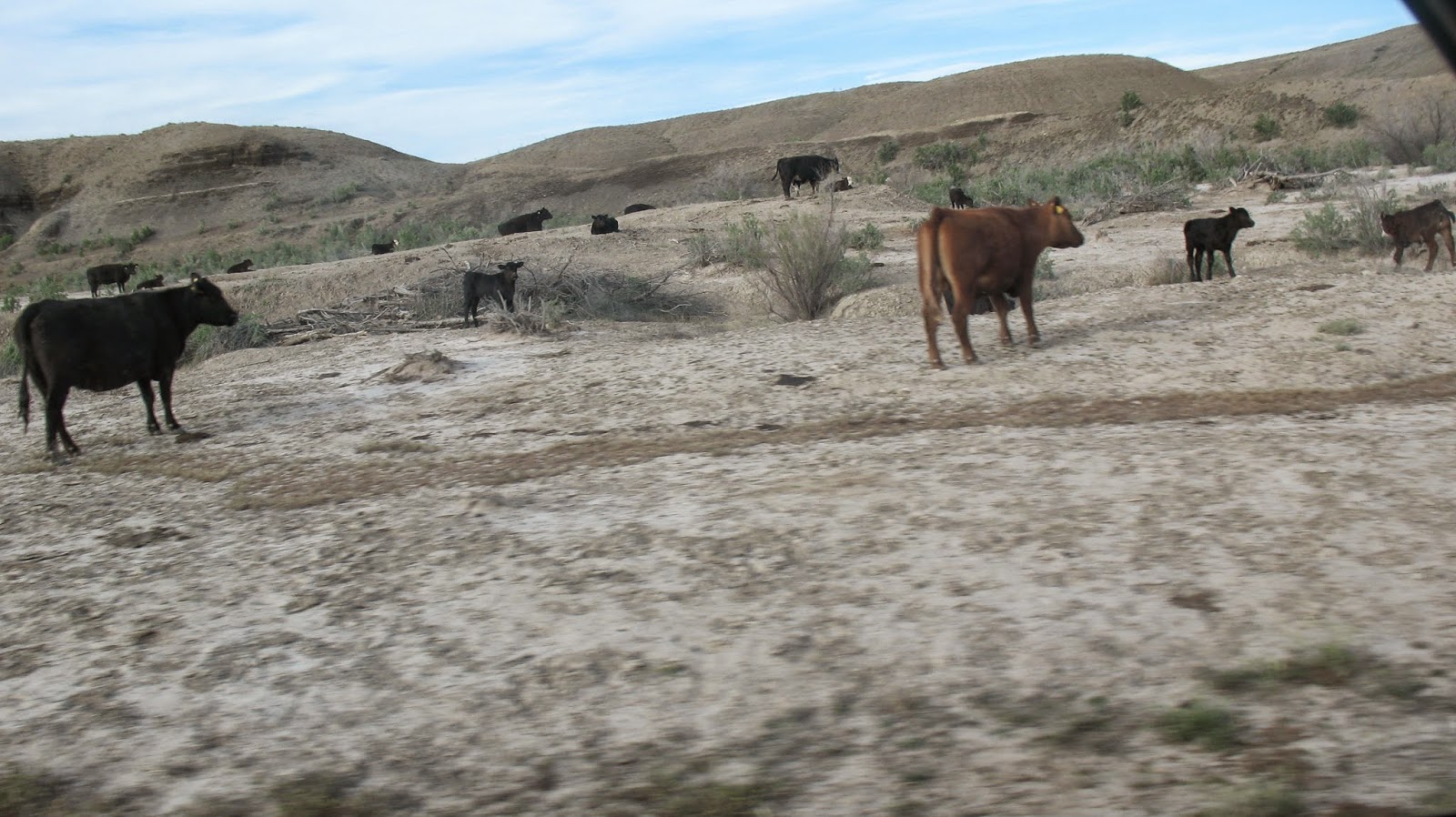
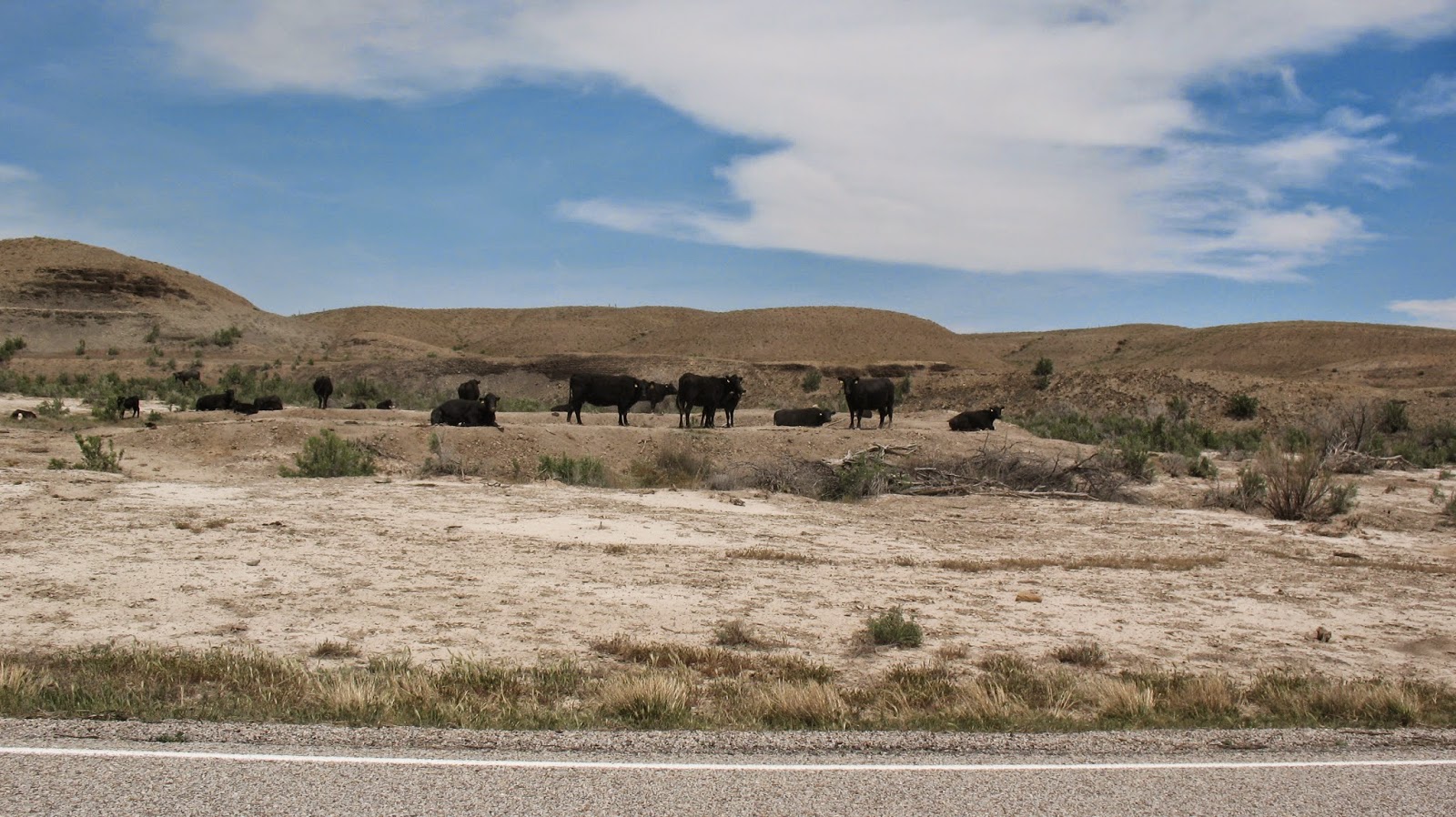
A while back, I had an online discussion about the care of cattle labeled as free-range or grass-fed or organic, who were being readied for the production of meat or dairy.  In a recent visit to Colorado and Utah, I experienced how those labels for the cattle are different from open-range, but in a way the treatment is the same.  Open range cattle is what you find on federal lands, i.e. public lands, managed by the U.S. Bureau of Land Management (BLM) in vast areas in Colorado and Utah and the like.
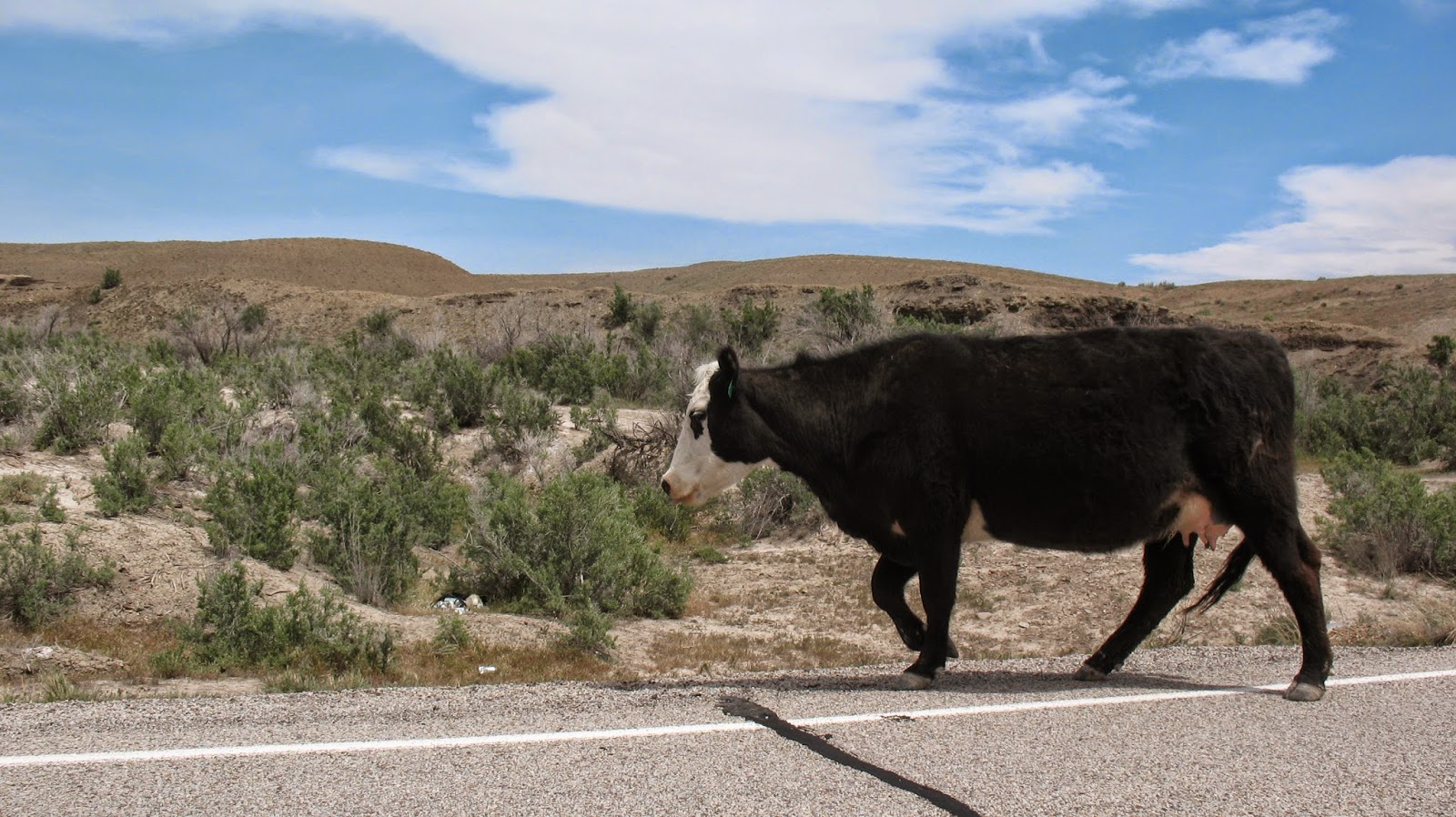
The cattle are owned by private ranchers who pay a modest fee for allowing their cattle to graze on large areas of such land.  These animals are not usually fenced in and are able to roam onto the road on which you are driving and they have the RIGHT OF WAY.
Where I came upon them, there were few signs of water in the form of a pond, or lake or stream, much less a river.  Most of the land was dry scrub and/or desert.
What I found out is that just like cattle on private land, described in previous posts, the owners will transport water to their animals intermittently.Voila! Learning this also solved the concern about cattle on a grass fed farm where there was no sign of water. This, of course, makes a lot of sense as hauling the water out to the cattle rather than leaving a tank of water to evaporate or be turned over or some other problem is much more efficient and caring of a precious resource like water, especially in a desert area.


Saturday, September 20, 2014

In case you don't already know, be prepared for major issues with taking the Amtrak train from western states into NYS.

This train, the Lakeshore Limited from NYS to Chicago and the California Zephyr from Chicago to California, runs ONCE per day.

I took it twice this year with the most recent trip being a more major disaster. than the first trip. The train was 2 hours late by the time it reached Reno, NV.  It was stuck in the desert outside Reno for about two hours with no power, i.e. no AC nor lights!.  Something allegedly fell off the engine!  Conductors stood around discussing what to do, I was told.

The train came into Grand Junction 4 hours late where I got on.  Prioritizing of freight traffic, including very long coal trains and very, very long oil trains, made the train more and more delayed.

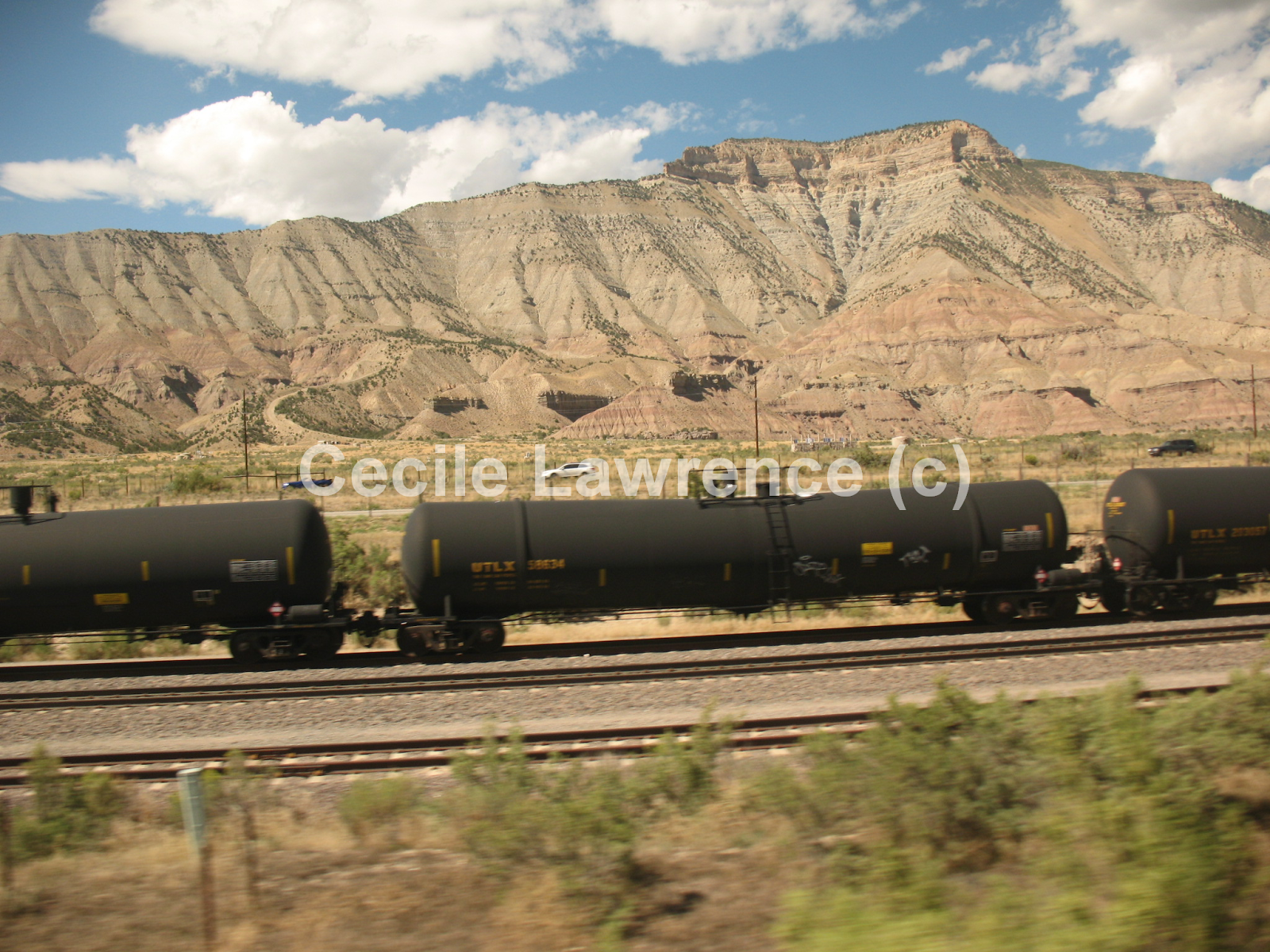
The above photo of just a tiny piece of a long line of oil cars (one of several lines of cars I saw on my four trips out to Colorado and back) has the BookCliffs in the background, which is subject to drilling and definitely is being fracked as I saw the lights for three gas wells, one after the other, just outside Grand Junction on my second trip out).

An hour before Omaha, NE, we stopped yet again, allegedly due to freight traffic.  However, cops were let into the car behind me and I hear dogs were brought on to sniff people and luggage.  Two men were taken off in handcuffs, (allegedly for carrying pot across state lines; where they had gotten on I don't know).  At least one passenger accused the conductors of lying, that the stop outside Omaha was to wait for the cops to arrive, not due to freight traffic.

The conductor announcing also claimed that, in addition to the freight train movement reason for the 2 hour wait on the track just before Omaha, NE, they had to wait for a change of crew to appear as the maximum train conductors are allowed to work under federal law is 12 hours and from when the current crew had gotten on in Denver, CO, 12 hours had passed.  Some passengers claimed that also was a lie.  Personally, I found it curious that the conductor who let us on to the Lakeshore Limited train in Chicago onto the car for people getting off at upstate NY stations like Buffalo, Rochester, Syracuse was very present in the car up until at least Syracuse where I got off, more than 12 hours later. 

Also, the smokers were not let off for a smoke during our long stop on the tracks outside Omaha and one man got really angry.  He also was taken away in handcuffs.  Some social media savvy young folks contacted an Omaha TV station.  At the Omaha train station, the TV people - Channel 7 KETV, I heard, showed up and interviewed them and others.  Some said they felt like AMTRAK had held them hostage. AMTRAK train passenger caught with pot

We were supposed to arrive in Chicago at around 3:00 P.M. Monday.  We did not get there until 2:30 A.M. Tuesday, the following morning, unloading into a locked Union Station in Chicago.

Those who missed the connection to the Lakeshore Limited train to NY were presented with a table of crappy, cheap array of highly processed food (i.e. dead food), to line up for vouchers for an overnight at a hotel and $10 cash for breakfast.  We lined up around 4:00 a.m. to get onto a coach bus to take us to the motel, which turned out to be about 1/2 hour away on the highway to Indiana.  It was a Red Roof Inn in a dangerous, industrial area.  Two cop cars were outside my ground floor room after I locked it. I did not gingerly get into bed until 5:00 a.m. I woke up at my usual 7:00 a.m. thus got 2 hours sleep that night. In the a.m. I was the first out into the parking lot to start a line to get back on the bus. As we waited for the coach to come to take us back to Union Station at 11:45 a.m. to catch the next day's train to NYS, I heard that at least one other stranded AMTRAK passenger saw gunshots in his/her motel door.  That person or another person saw bloodstains on a door or in the room. If we had any doubt that classism infuses ride by rail in the U.S., i.e. AMTRAK, these experiences completely cleared them.  If you choose to ride by rail in the U.S., specifically NYS, it's assumed you are low income and thus low class since you're not driving or not traveling by airplane.

Our departure would not be until 9:30 p.m. a day late from Chicago. Thus we had a lot of time to kill waiting in Union Station or wander around Chicago.

Be prepared!
Take a few carry-ons but a blanket and a pillow are a must.

My train car was freezing with AC.  I took a large square of fleece and wrapped myself in it for warmth and to keep out the overhead light overnight. The back of the car to NYS has restroom doors that have to be slammed to get shut.  Thus keeping one awake.
The last seats (numbers 1 and 2) are turned around backwards for wheelchair accommodation
If you're lucky enough to have two seats side by side to yourself, tip back both backs, click out both foot rests and you thereby have a sort of bed.  Works if you're short at 5 ft. tall. :)

Again, as we made our way across the top of midwest to northeast, we started getting more and more delayed.  I was supposed to get into Syracuse at 10:23 a.m. and did not arrive until 5:00 p.m.  The person picking me up in Syracuse has to wait 2 hours for me to arrive, thus having to pay $7 for parking in the expensive parking lot.

Carry lots of good food and drink, unless you want to spend a pile of money on train food.  Grapes, sealed containers of hummus, dried apples, pears, small packs of cheese, jerky, crackers.

Be well and safe.

Sunday, July 27, 2014

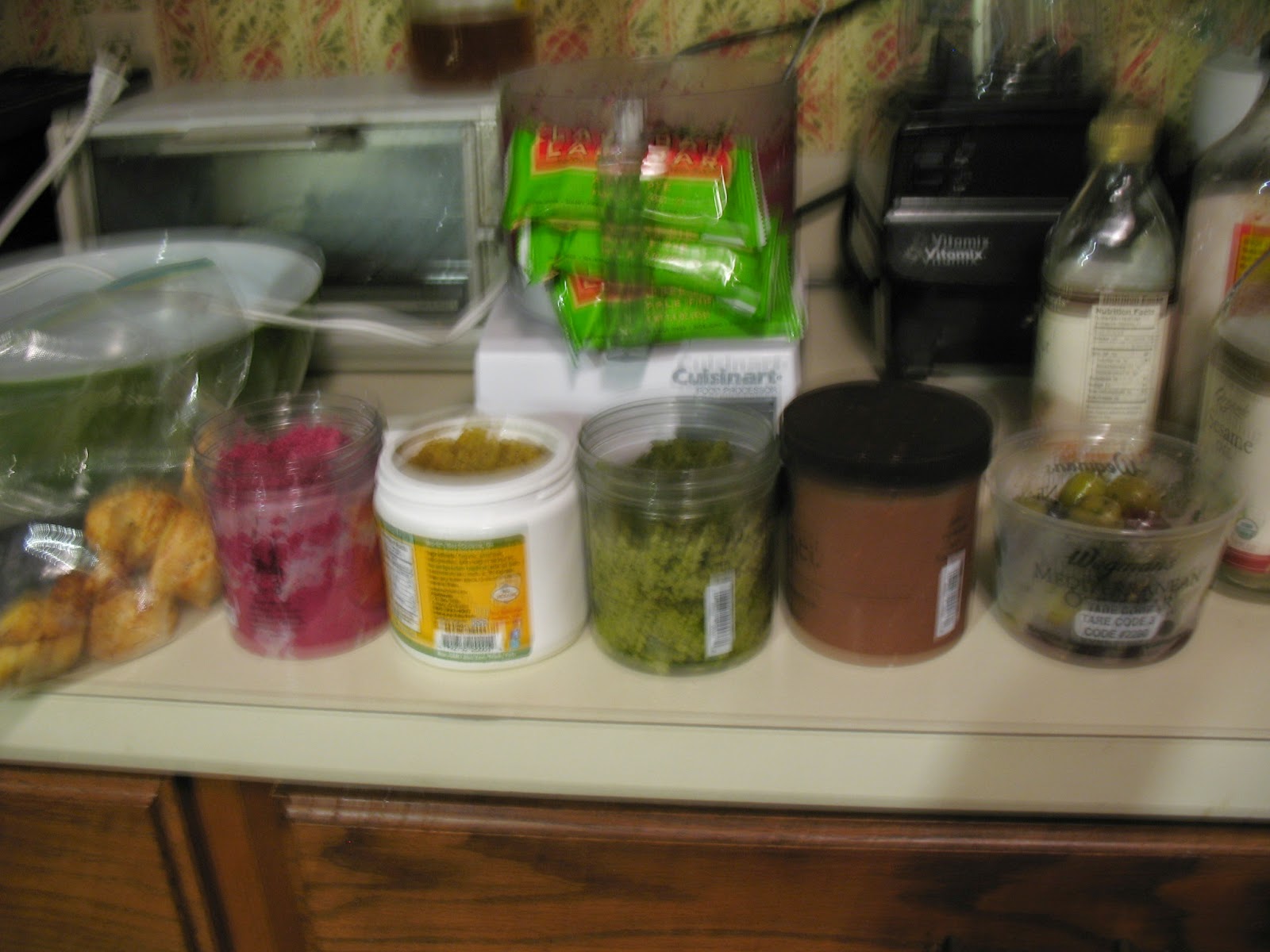
Food stash in prepping for train trip

Prepping for train trip of 3 days and 2 nights on the train.  Insulated food bag stuffed in the freezer, along with the below items mostly just made a few hours ago.

From the left:  
corn flour biscuits made yesterday and half already eaten :(
Planning to make more in the a.m.
Beet hummus with cashews and not much chick peas.  I was just running the food processor from one item to the next without hassling with undoing the food processor container, washing it, etc. 
I started with the original hummus to the right of the beet concoction, then proceeded to the mixed herbs hummus sorta cheese-less pesto, then proceeded to the beet mix.  To the right of the green mixed herbs mix is my usual choco treat, made with soaked dates and soaked cashews with a dash of cinnamon and agave syrup or maple syrup along with two tbl of organic cocoa powder. Last on the right is a small tub of olives and one remaining stuffed grape leaf.  Behind, resting on the front of the food processor are 3 Larabars, one for each day.  The dregs of the beet mix are in the food processor to which I intend to add the rest of the herb leaves (basil, parsley, sage, rosemary, thyme - Ha ha) in the a.m. with some more lemon juice, already juiced into a peanut butter jar. To the left in the second row is the large bowl, put out to motivate me to get more biscuits done early in the a.m., maybe with rosemary leaves tossed in.
Then to mow early before it heats up. 
The biscuits with the dried rosemary leaves were very delicious.